Interactive lessons
Philosophy you scroll through; exercises that correct themselves.
A set of self-contained HTML/JS tools I build for my own classes: a Descartes scrollytelling lesson, a feudalism-to-modernity timeline, and a guided Plato cave sequence. They are used as classroom material: students scroll, answer, retry, and get immediate feedback without accounts or student data.
Open the live demoThe Imaginarium Machine
A classroom machine for starting stories and leaving the writing to students.
A local-first creative writing app for A2 English learners. It organizes prompt cards, characters, constraints, and play modes; students use them to write, draw, speak, or act their own stories.
Open the live demoEHOBA
A monthly 53-hotel survey turned into a rule-bound processing agent.
EHOBA processes Buenos Aires's monthly hotel occupancy survey for IDECBA, validates submissions against fixed consistency rules, and follows a documented eight-step correction order. I built it end to end with Claude Code, including the desktop UI, processing pipeline, and design system.
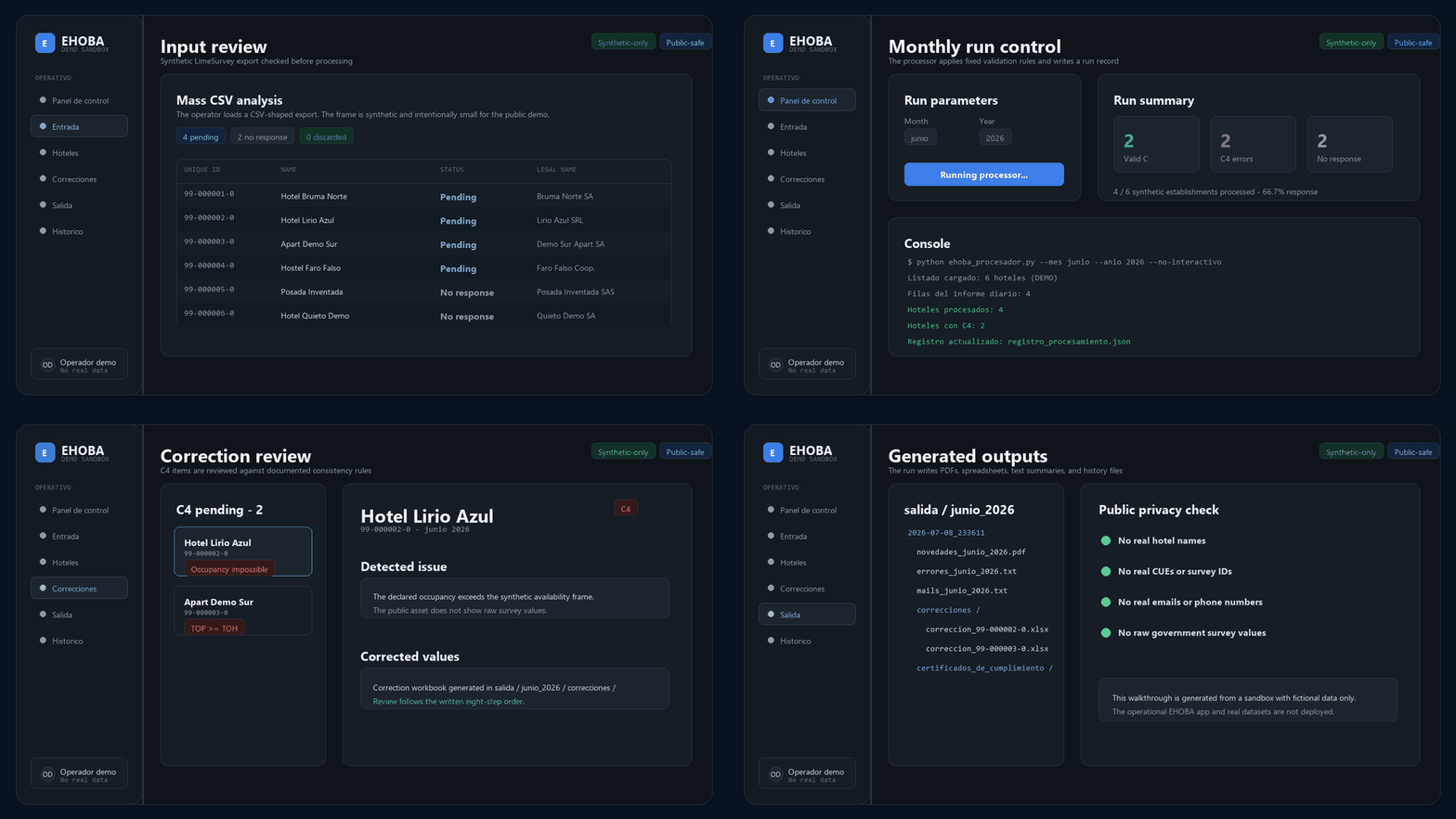 Watch the walkthrough
I've worked with language models since 2022 — prompting them, testing their reasoning, watching where they fail.
I build with them on one condition: they extend human judgment, they don't stand in for it. Bias, gaps, and confident errors are the interesting part — the places where a philosopher's training earns its keep. That criterion is the whole point.